Introduction: Press Club Patiala
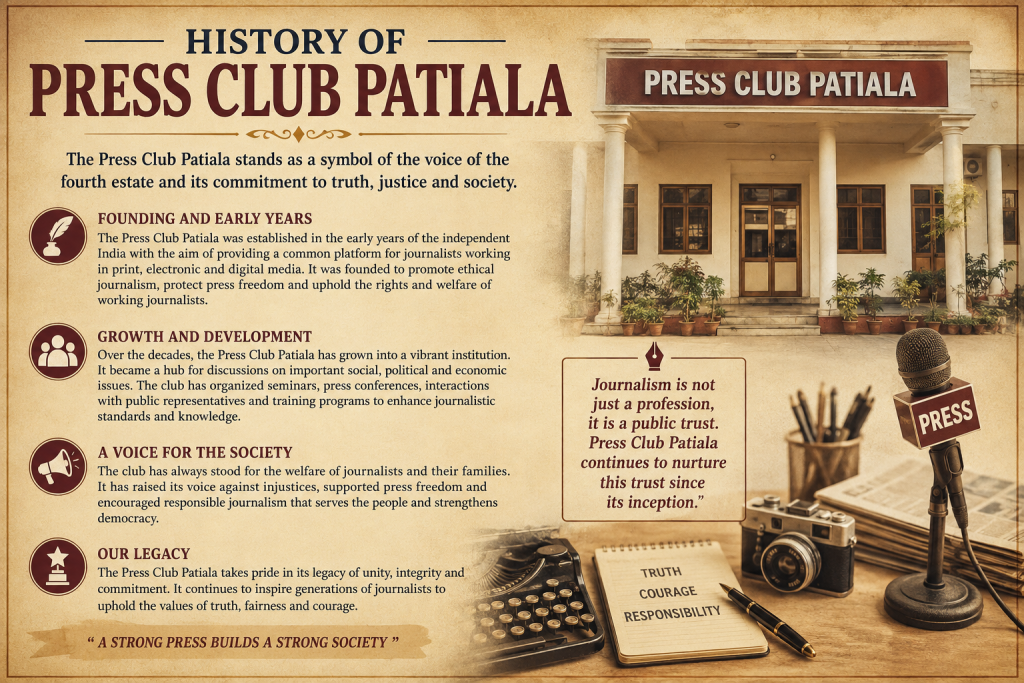
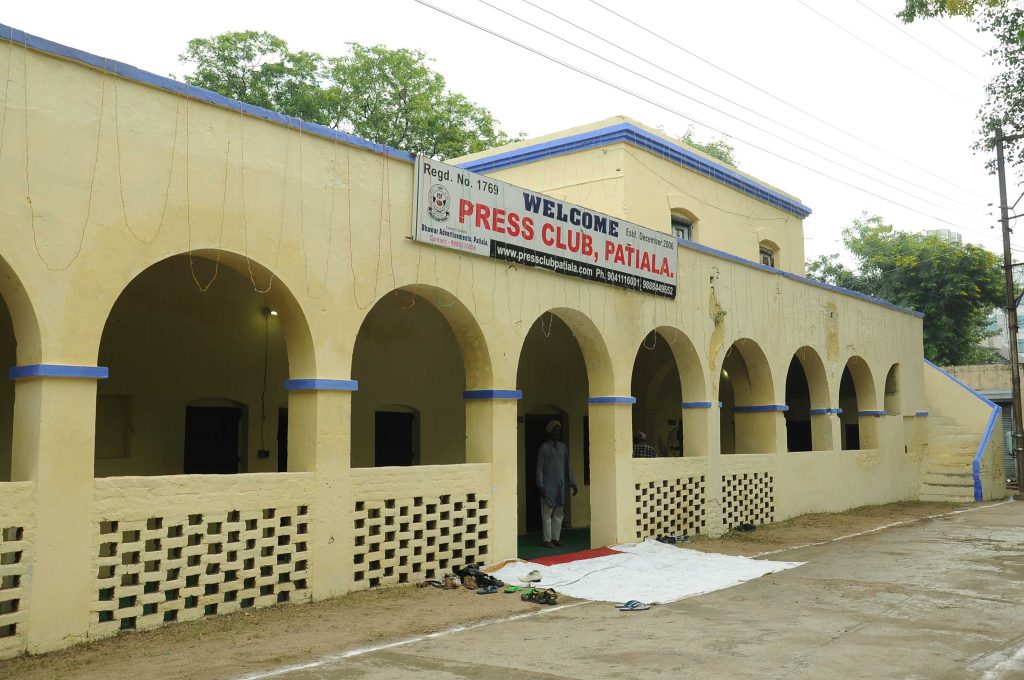
Introduction: Press Club Patiala
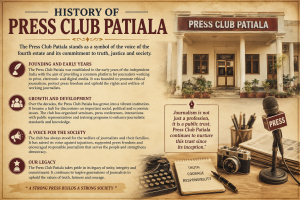
The Press Club Patiala serves as the central hub for journalists, media professionals, and photojournalists operating across the Patiala district and the Malwa region of Punjab. Located near the historic Baradari Gardens and the 20 Number Railway Crossing, the institution provides a unified, professional platform for the Fourth Estate to uphold press freedom, facilitate professional growth, and foster social dialogue.
Establishment & History
Established in 2006 under the patronage of then Chief Minister of Punjab, Captain Amarinder Singh, the Press Club Patiala was envisioned as a dedicated space to empower local media personnel. Its creation addressed a long-standing need for an organised, independent body capable of catering to the welfare, security, and collaborative demands of regional journalists. Over the years, the club has grown into a cornerstone for local media representation, led by an elected executive body of senior journalists.
Core Objectives & Activities
-
Advocating Press Freedom: Protects the rights of local correspondents and acts as a collective voice against challenges faced by working journalists.
-
Media & Press Conferences: Provides a venue for press briefings, public declarations, political interactions, and civil society announcements.
-
Professional Development: Hosts workshops, seminars, and interactive sessions aimed at adapting to evolving digital media trends and newsgathering technologies.
-
Networking & Community: Functions as a social and professional retreat, promoting fellowship among media personnel, photojournalists, and broadcast teams.
Today, Press Club Patiala continues to bridge the gap between the public, the administration, and the media fraternity—serving both as a guardian of democratic dialogue and a dedicated support centre for working journalists.
Beyond the Headlines: Struggles and Milestones of Press Club Patiala
While formal accounts record its establishment in 2006 near Baradari Gardens, the true history of Press Club Patiala is defined by grassroots advocacy, political navigation, and a drive to build an independent voice for journalists in the Malwa belt.
1. The Early Struggle: Organising a Divided Fraternity
-
Lack of Infrastructure: Before 2006, local reporters, stringers, and photojournalists lacked a dedicated facility. Press briefings often took place in makeshift spots, tea stalls, or rented halls, leaving journalists without secure space to file news stories or exchange information.
-
Securing Official Recognition: Local journalists fought for years to secure government land and institutional support. The effort culminated when then-Chief Minister Captain Amarinder Singh formally sanctioned the club’s allotment.
-
Protecting Regional Stringers: Small-town stringers across Punjab frequently faced administrative pushback and safety risks. Unifying these distinct local journalists into a single protected body was an early organisational hurdle.
2. Key Milestones & Major Achievements
-
A Hub for Democratic Dialogue: The club evolved into a key venue in Patiala for political press conferences, civil society movements, trade union briefings, and public disclosures.
-
Journalist Welfare & Digital Evolution: Over the years, the leadership organised legal aid networks for media workers and hosted training sessions to help veteran journalists transition from traditional print to digital publishing and social reporting.
3. Leadership & The Role of the President
The presidency of the club—historically held by senior journalists such as Parveen Komal—carries a demanding dual mandate:
-
Balancing Integrity with Access: Navigating relationships with political parties and local administration without compromising editorial independence.
-
Crisis Management: Stepping in as an advocate when reporters face harassment, police pressure, or administrative interference while covering sensitive regional issues.
-
Unifying the House: Ensuring fair representation across print, television, digital media platforms, and photojournalism through regular elections and open discourse.
Today, the Press Club Patiala stands as a testament to collective resilience—built through years of grassroots campaigning by journalists determined to secure a protected, dignified platform for news reporting in Punjab.
The President of the Press Club Patiala is Mr Parveen Komal.
Brief Introduction
-
Media Leadership: Parveen Komal is a senior journalist in the Malwa region who serves as the President of Press Club Patiala and leads the broader Press Club Punjab network. He also holds leadership roles across media rights initiatives, including heading the CMD Right Action Group of Media.
-
Advocacy & Rights: Beyond regional press coverage, he actively advocates for the protection and rights of journalists, working as the Chairman of the International Human Rights Organization for Police Public Press.
-
Key Role & Focus: Under his leadership, the Press Club Patiala focuses on upholding editorial integrity, safeguarding local reporters and stringers across district beats, coordinating administrative welfare initiatives, and organising annual executive bodies for the local media fraternity.
In September 2008, a major media showdown occurred in Patiala involving Saif Ali Khan, his film crew, and the local press fraternity led by members of the local media (including those associated with the Press Club Patiala area).
Rani Mukerji was not involved in this altercation; her name is associated with Saif Ali Khan due to their on-screen pairings (e.g., Hum Tum, Ta Ra Rum Pum, Bunty Aur Babli 2), but she was not part of this incident.
The Incident: Railway Station Altercation (2008)
-
The Trigger
While shooting in Patiala (for his production Love Aaj Kal), Saif Ali Khan and his team were filming near the Patiala Railway Station. Local photojournalists from major print and television news outlets attempted to take photos of the set and actors.
-
The Conflict
Saif Ali Khan and his security team objected to the unapproved photography, wanting to protect the film’s unreleased look. A heated argument ensued, leading to Saif’s security staff allegedly seizing cameras and manhandling two local journalists—a print photojournalist and a local TV reporter.
-
The Local Media Backlash & FIR
The local journalism community in Patiala mobilised rapidly. Dozens of journalists blocked areas along Mall Road in protest, demanding police action against Saif Ali Khan and his security guards.
-
The Government Railway Police (GRP) in Patiala subsequently registered an FIR against Saif Ali Khan and four crew members under IPC sections including assault (Section 341) and criminal intimidation/threatening to kill (Section 506).
-
-
Political Intervention & Apology
The protest escalated to the point where political leaders stepped in to mediate between the press and the actor. Hours later, Saif Ali Khan held a meeting with local journalists. He issued a formal public apology on behalf of his security and production unit, clarifying that while he was not personally involved in the physical scuffle, he regretted the incident.
-
In January 2011, following the release of the Bollywood film No One Killed Jessica, Parveen Komal (serving as the President of Press Club Patiala) filed a formal police complaint against Rani Mukerji, co-star Vidya Balan, director Raj Kumar Gupta, and the film’s producers.
The Cause of the Complaint
In the film, Rani Mukerji played the role of Meera Gaity, an outspoken, foul-mouthed investigative journalist who pursues justice for the murder of Jessica Lall. Throughout her performance, the character frequently used strong vulgar language and profanity and made provocative gestures.
The complaint centred on two main issues:
-
Defamation of Journalists & the Media:
Parveen Komal and the Press Club Patiala argued that portraying a journalist as incessantly swearing and using vulgarities was a direct insult to the press fraternity. They stated that depicting journalists in this light degraded the profession—often called the “fourth pillar of democracy”—and presented an unrealistic, sensationalised image of reporters to the public.
-
Obscenity & Insult to Women:
The complaint asserted that the heavy usage of abusive language in the film crossed the line into vulgarity, served as cheap commercial shock value to generate box-office revenue, and constituted an insult toward women.
Actions Taken
Parveen Komal submitted the complaint on behalf of the Press Club Patiala to senior administrative and police officials, including:
-
The Inspector General of Police (Patiala Zone)
-
The Senior Superintendent of Police (SSP), Patiala
-
The Deputy Commissioner of Patiala
The petition sought the registration of a criminal case regarding vulgarity and obscenity against Rani Mukerji and the filmmakers.
Outcome & Response
The film’s team explained that the character of Meera Gaity was fictional and meant to portray an aggressive, non-conformist individual pushing back against political corruption. While the Central Board of Film Certification (CBFC) had already cleared the movie with an ‘A’ (Adult) certificate without cuts, the protest from Patiala highlighted the local media’s sensitivity regarding how regional and national journalists are depicted in mainstream cinema.
-
Hi, this is a comment.
To get started with moderating, editing, and deleting comments, please visit the Comments screen in the dashboard.
Commenter avatars come from Gravatar.